

If you are gaining weight during perimenopause or menopause, especially around your midsection, you are not imagining it. And you are not failing.
I hear this almost every week in my office. A woman comes in frustrated, exhausted, and a little defeated. She is eating the same. Moving the same. And yet her body looks and feels completely different. Her pants fit differently. Her belly is doing something new.
So let me say this clearly: menopause weight gain is real, it is common, and it is not a willpower problem. In this post, we are covering why it happens, what is actually driving it, what works, and when to get a closer look.
Is Weight Gain Normal During Menopause?
Yes. Full stop.
Weight gain and body composition changes are common in midlife. Many women notice more fat settling around the abdomen — even when the scale has barely moved. That is what makes menopause belly fat so frustrating. Your shape can change before your weight does.
But the truth is, menopause is not the only factor. Aging, declining muscle mass, disrupted sleep, increased stress, and reduced daily movement all contribute. It is usually several things happening at once, not one single villain.
Does It Start in Perimenopause?
For most women, yes — changes begin in perimenopause, often in the early-to-mid 40s, well before periods stop completely. Hormonal fluctuations start years before your last cycle, which is why your body may already feel different while you are still having periods. If that is you, perimenopause is almost certainly part of the picture.
This also matters because it means the window to build healthy habits, especially around muscle mass and sleep, starts before menopause is ‘official.’ The earlier you get ahead of it, the better.
How Much Weight Gain Is Typical?
There is no universal number, and I want to be careful here. Numbers can make women feel like a figure on a scale defines how well they are handling this transition. It does not.
What I will tell you is this: for many women, the bigger concern is not a dramatic jump on the scale but a gradual change in body composition and fat distribution.
Your weight might be up only a few pounds, but your shape and how you feel in your body can shift significantly. That is the part that tends to catch women off guard — and it is the part worth understanding and addressing.
Why Does Menopause Cause Weight Gain? What’s Actually Happening
There is not one single cause. Usually, several things are going on at the same time.
Estrogen Shifts Fat Storage Toward the Abdomen
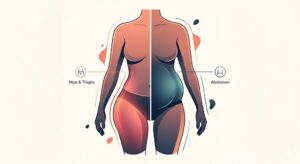
As estrogen declines, the body tends to move fat storage away from the hips and thighs and toward the belly. That abdominal fat includes visceral fat — fat that sits deep around your internal organs, not just under the skin.
Visceral fat is not just a cosmetic issue. It is linked to cardiovascular risk, blood sugar problems, and cholesterol changes. This matters beyond how your jeans fit.
Muscle Mass Declines — and Takes Your Metabolism With It
This is the one I want every woman to hear. Muscle is metabolically active — it helps your body burn calories at rest. As women age, especially without deliberate resistance training, muscle mass naturally decreases.
Less muscle means a lower resting metabolism, even if nothing else has changed. This is exactly why ‘just eat less’ falls flat for so many women in this stage. The equation has changed.
Sleep Disruption, Stress, and Insulin Resistance Pile On
Poor sleep from hot flashes, night sweats, or insomnia disrupts hunger hormones, increases cravings, and drains the energy needed to make healthy choices.

Chronic stress raises cortisol, which drives abdominal fat storage. And some women become more insulin resistant during midlife, meaning their bodies process blood sugar differently than they used to. If you have a history of PCOS or prediabetes, this is especially worth discussing with your doctor.
Do Not Forget to Rule Out Your Thyroid
Thyroid disorders — particularly hypothyroidism — become more common in women with age. Fatigue, weight gain, constipation, and feeling cold all the time can look a lot like menopause. If you have not had your thyroid checked recently, add it to the conversation.
What Actually Helps With Menopause Weight Gain
Here is the real answer, not the easy one. The strategies that work in menopause are consistent, not extreme. And they are different from the general weight-loss advice you have heard your whole life, because your body is in a different phase.
1. Strength Training — This One Is Non-Negotiable
If I could give every woman in perimenopause or menopause one piece of advice, it would be this: lift something heavy.
Resistance training preserves and rebuilds muscle mass, supports your metabolism and bone density, improves blood sugar, and helps with mood and energy. It does not have to mean bodybuilding.
Bodyweight exercises, resistance bands, free weights — even two to four sessions a week make a real difference. Start with consistency over intensity.
2. Prioritize Protein at Every Meal
Protein supports muscle synthesis, satiety, and blood sugar stability — all especially important in midlife. Most women are not eating enough of it, particularly at breakfast.
Build meals around a protein source, then add fiber-rich carbs and healthy fats. Eggs, poultry, fish, Greek yogurt, legumes, cottage cheese, tofu — aim for intentional, not perfect.
3. Build Satisfying Meals, Not Smaller Ones
The instinct when you are gaining weight is to eat less. But for many women in menopause, extreme restriction backfires — it increases cravings, tanks energy, and can accelerate muscle loss.
Focus on meals that genuinely satisfy you: enough protein, fiber from whole foods, and healthy fats. Break the cycle of under-eating all day and overeating at night.
4. Fix Your Sleep
Sleep is not a luxury. It is part of weight management. If hot flashes, night sweats, or insomnia are wrecking your rest, that deserves real attention — not just acceptance.
Better sleep improves energy, cravings, and blood sugar regulation. Talk to your OB-GYN about what is disrupting your sleep and what options are available.
5. Move More Throughout the Day
Formal workouts matter, but so does what you do the rest of the day.
Non-exercise activity, such as walking, taking the stairs, standing more, staying generally in motion, adds up over time and supports insulin sensitivity in ways a single gym session cannot fully compensate for. If you are mostly sedentary outside your workouts, that gap is worth closing.
6. Manage Stress and Take an Honest Look at Alcohol
Stress management is not about adding a morning routine to an already full plate. It is about recognizing that chronic stress has a real physiological effect on your body, specifically on cortisol, abdominal fat storage, and your ability to sleep and recover. Even small changes, such as walking, therapy, and better boundaries, can matter more than you expect.
And alcohol deserves a candid look. Its effects on sleep quality, appetite, and calorie intake often become more noticeable in midlife. You do not need to cut it out entirely, but if you are doing everything else right and still struggling, this is one of the first places worth examining honestly.
What Kind of Exercise Is Best?
The best plan for most women includes a mix of strength training (2–4 times per week), regular walking or cardio for heart health and blood sugar, and mobility work for joints and recovery. The keyword is mix, not just one or the other.

The most common mistake I see is women doing lots of intense cardio to ‘burn off’ belly fat, with no resistance work in the picture. Cardio is valuable, but without strength training, you are not addressing the muscle loss that is driving so much of what you are experiencing.
If you are not sure where to start, begin with 20–30 minutes of walking most days and two days of strength work. It does not have to be complicated. You can build from there.
What Should You Eat?
There is no single ‘menopause diet’ that works for every woman. But the principles that help most are consistent:
- Prioritize protein at every meal
- Eat plenty of fiber-rich vegetables, legumes, berries, and whole grains,
- Include healthy fats for satiety, and
- Build meals that actually fill you up.
- Avoid extreme restriction as it tends to accelerate muscle loss and increase cravings.
- Watch liquid calories and frequent snacking that can quietly add up without ever feeling satisfying.

The goal is not to eat as little as possible. The goal is to eat in a way that supports muscle, energy, hormones, and long-term metabolic health. That is a very different target than a crash diet.
What Does NOT Work
Women are given a lot of advice that sounds disciplined but backfires. Here is what tends not to work:
- Crash dieting or very-low-calorie approaches that accelerate muscle loss
- Skipping meals all day and then overeating at night
- Doing hours of cardio with zero resistance training
- Trying to spot-reduce belly fat with core exercises alone
- Relying on supplements as a primary strategy
If your body is already under hormonal, metabolic, and sleep stress, adding more extreme stress is not the answer.
Can Hormone Therapy Help?
Hormone therapy is not a weight-loss treatment. Let me be clear about that.
But it can help indirectly. For women whose hot flashes, sleep disruption, and mood are significantly impacted by menopause, MHT (menopausal hormone therapy) may make it meaningfully easier to exercise consistently, eat well, and sleep enough, all of which support weight management. There is also some evidence that it may help with body composition in certain women.
Whether it is right for you depends on your individual symptom picture and risk factors. For a deeper dive, check out my post on the FDA removing the black box warning from menopause hormone therapy.
When to Get a Closer Look
Sometimes, weight gain is part of the normal menopause transition. Other times, it warrants a workup. Talk with your doctor if you notice:
- Rapid or significant weight gain out of proportion to your habits
- Fatigue beyond what poor sleep explains
- Hair loss, constipation, or feeling cold — possible thyroid signs
- Depression or significant mood changes
- Snoring, gasping, or signs of sleep apnea
- Blood sugar irregularities or a history of PCOS
- Recent medication changes
Thyroid disorders, insulin resistance, and sleep apnea can look a lot like menopause. Advocate for a full workup. You know your body.
A Realistic Mindset
The goal may not be to return to the body you had at 30. And that is not failure, it is biology. The goal is to support your health now, in this body, at this stage.
That might mean stronger legs. Better energy. Labs that look good. Pants that fit well, even if the scale is the same. It might mean sleeping through the night again without waking up drenched in sweat. It might mean feeling more like yourself than you have in years.

You are not failing. Your body is changing. The women who navigate this transition best are usually the ones who work with that change — not against it — with sustainable habits, realistic expectations, and a doctor who takes them seriously. Small, consistent changes outperform dramatic ones every single time.
Bottom Line
Menopause weight gain is real, common, and especially noticeable around the abdomen. Hormones are part of the story — not the whole story.
What actually helps: strength training, adequate protein, better sleep, stress management, honest habits, and a healthcare team that takes your concerns seriously.
Women deserve better than ‘just eat less.’ They deserve answers that account for what is actually happening in their bodies — and support built for this phase of life.
Got questions? Drop them in the comments. And please, loop in your friendly OB-GYN. Knowing is half the battle.
Until next time,
Choose happiness.
Dr. Angela.
Frequently Asked Questions
Why am I gaining weight in menopause even though I eat the same?
Because your body is responding differently to the same habits. Hormonal shifts, muscle loss, disrupted sleep, and aging all affect how your body processes food and stores fat — even when your intake has not changed.
Does menopause slow metabolism?
It can — particularly as muscle mass declines. Since muscle burns calories at rest, less of it means a lower resting metabolic rate. Strength training is one of the most effective ways to counter this.
Can you lose menopause belly fat?
Yes, but not through quick fixes. The most effective approach combines strength training, protein-focused nutrition, improved sleep, and consistency over time. There is no shortcut, but there is a path.
What is the best diet for menopause weight gain?
One that prioritizes protein, fiber-rich whole foods, and healthy fats — without extreme restriction. The goal is meals that support muscle, energy, and hormones, not meals that punish you.
Is menopause belly fat dangerous?
Visceral fat — the deeper abdominal fat that increases during menopause — is associated with cardiovascular risk, blood sugar issues, and metabolic changes. This is a health issue, not just a cosmetic one.
Does hormone therapy cause or prevent weight gain?
It is not a weight-loss treatment. But by improving sleep, hot flashes, and overall quality of life, MHT may make it easier to maintain the habits that support a healthy weight.
When should I be concerned about weight gain during menopause?
If it is rapid, significant, or paired with fatigue, hair loss, mood changes, or signs of thyroid or blood sugar issues — get a full evaluation. Do not assume everything is just menopause.
Resources
The Menopause Society (formerly NAMS): https://www.menopause.org
ACOG — Menopause: https://www.acog.org/womens-health/faqs/the-menopause-years
NIH — Women’s Health Initiative: https://www.nhlbi.nih.gov/science/womens-health-initiative-whi